
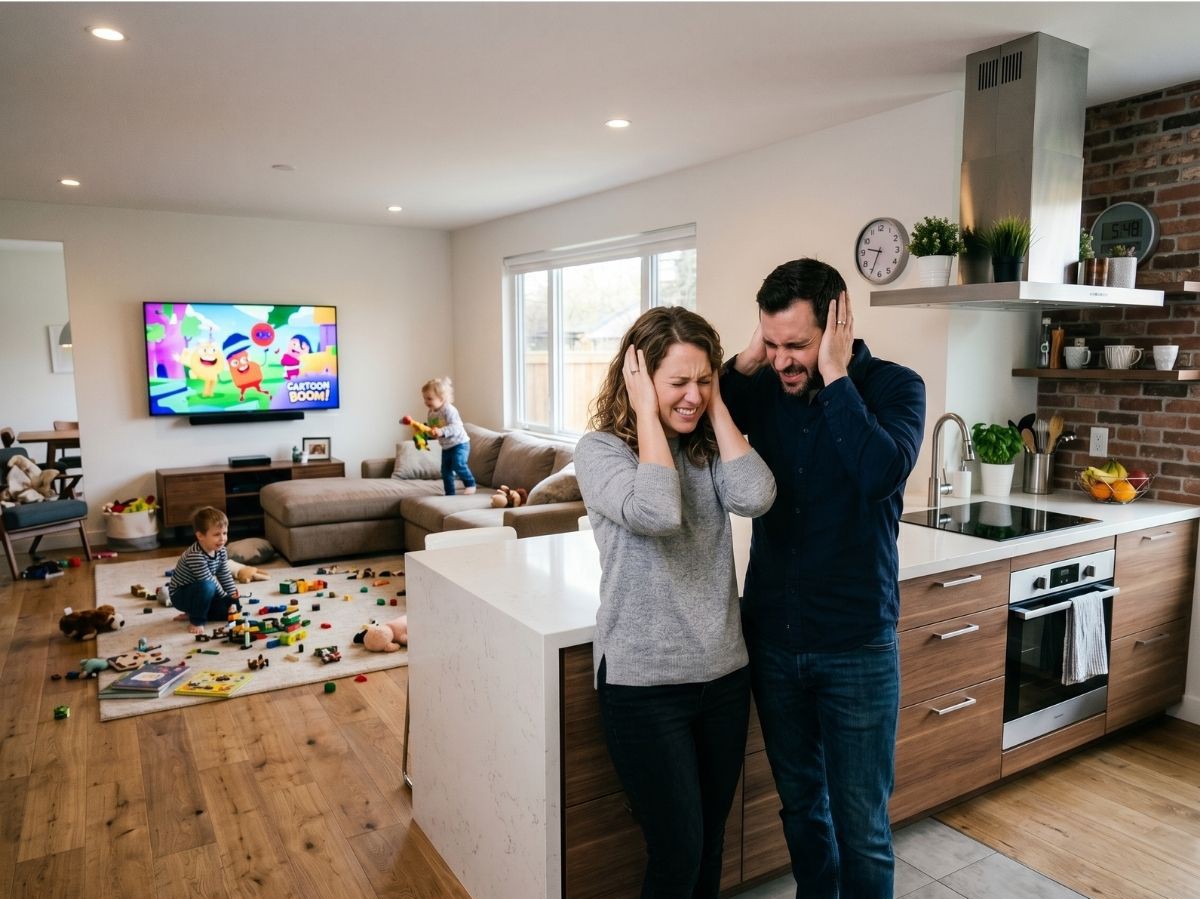
When we imagine a comfortable home, we often focus on the rooms’ temperature, lighting, or layout. And yet, the residence’s indoor noise level plays a huge role in our quality of life.
A very loud environment can quickly become tiring, even if people aren’t consciously aware of it.
Here are a few lesser-known factors.
1. Lots of Hard Surfaces
An abundance of hard surfaces is one of the most common causes of a noisy house. Sound bounces easily off these surfaces, which magnifies echoing in a room.
Certain materials are very good at reflecting sound:
- Concrete
- Ceramic
- Bare walls
- Large windows
In a room with few sound-absorbing elements, footsteps or even the clatter of dishes can quickly resonate throughout the space.
Despite this, these materials remain very popular in contemporary homes. Nevertheless, introducing textiles, rugs, and furnishings can help diminish the acoustic vibrations.
2. High Ceilings and Open Concept Rooms
Modern homes often feature open-plan layouts and high ceilings. These features create a sense of space and brightness, but they can also amplify sound.
Sound resonates in a large open concept room, moving freely from one area to another. Consequently, conversations in the kitchen can easily be overheard by those in the living or dining room. This is known as reverberation!
3. A Lack of Textile Elements
Textiles play an important role in improving the acoustics inside a building. Fabrics absorb some of the sound waves and help to reduce echoes in a room.
A minimalist home, with few textiles, thus tends to feel noisier. Once again, curtains and rugs rank high as a means of dampening sound, but so do many other fabric items, such as cushions or throws.
4. Little Furniture
The furniture layout can also affect how sound travels throughout a house.
A nearly empty room can act like an echo chamber and heighten noise levels. Conversely, strategically placed furniture can help to absorb and reduce sound.
For example, a large bookcase filled with books often acts as an excellent sound barrier. Similarly, a sofa, armchairs, or even certain plants can help muffle sound.
The aim isn’t to clutter the room, but rather to achieve a balanced layout.
5. Poorly Soundproofed Floors
In some houses or condos, the sound of footsteps easily carries from one room to another or between levels.
Hard flooring materials, such as wood, concrete, or laminate, transmit vibrations better than soft surfaces.
This phenomenon is particularly noticeable in multi-storey dwellings, where occupants can hear everything happening on the floor above.
If you don’t want to put down carpeting, consider consulting a company specializing in acoustics for advice on possible soundproofing upgrades and a quote for the work. Installing acoustic panels on the walls, for example, can make a big difference.
People often underestimate the impact of noise in the home. Yet a noisy environment can quickly become a source of stress or irritation.
What simple changes can you bring to your home to reduce noise?